What we will not claim
Seaweed is not a carbon offset. We are not going to sell you one.
You will read that seaweed sequesters carbon at scale. The most-cited estimate puts it at roughly 173 million tonnes of carbon a year globally — with a stated range running from 68 to 268 million. The range is that wide because the science is not settled.
More to the point: that figure describes wild seaweed carried out to the deep ocean. Farmed seaweed mostly grows in sheltered bays, where the evidence suggests carbon settles close to the farm and returns to the cycle — one study tracked 90% of it landing within four kilometres.
So seaweed's climate value in our supply chain is not what it buries. It is what it never needed — no land, no irrigation, no fertiliser to grow — and what it lets a farmer stop buying.
This section costs us sales. Buyers arrive looking for a carbon story and some of them leave when they do not get one. We keep it here because it is the cheapest way to tell you what we are like to work with before you have paid us anything: if a supplier offers you certified seaweed carbon today, ask them to quote the range we just quoted you.
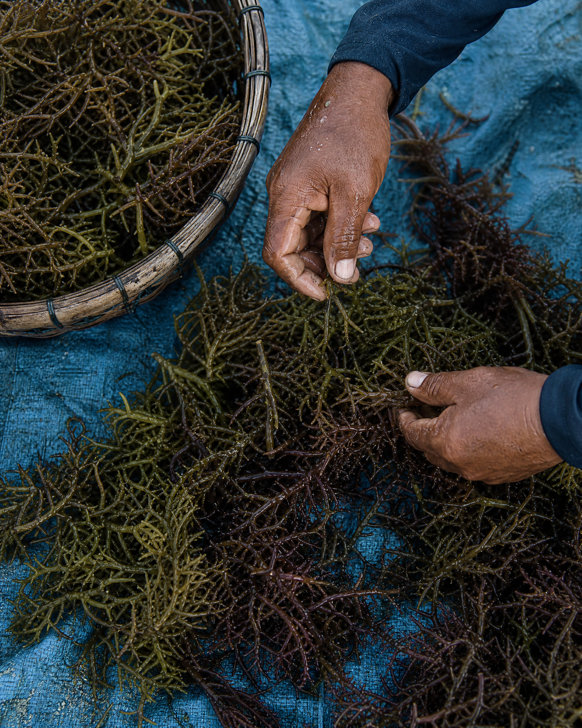
Three stages from soil diagnosis to verified harvest grade.
We don't sell generic off-the-shelf drums. We operate an agronomy programme tailored to your soil chemistry and yield goals.
Formulate
Every GROOW™ blend is built against a specific crop, soil profile and target — yield, Brix, uniformity, or stress tolerance. There is no single product waiting on a shelf, because there is no single field.
Deploy
Our agronomists write the dosing calendar against your crop stages, train your field team, and stay through the season. The programme is the product.
Prove
Outcomes are recorded per plot and reported back to you. Where a programme underperforms, we say so and reformulate.
Changing the Denominator
The number every input is sold on. It rewards whoever is cheapest per litre, ignoring end-of-season crop quality.
The number that decides whether your season paid. It is the only metric we agree to be measured on.
“Cheap input and expensive harvest is a trade most growers make without noticing, because nobody puts the second number on the invoice. We put it in the contract instead.”
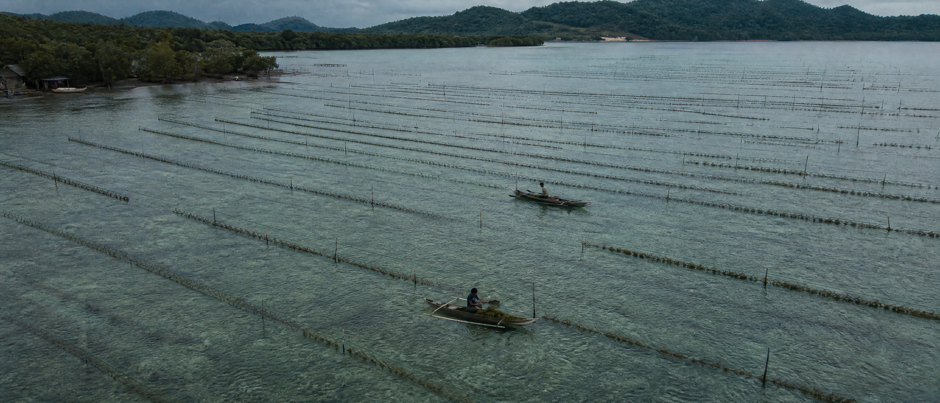
We are small enough that your season matters to us.
Seven hectares under our direct management. Eight hundred partner farmers. Against a state fertiliser producer with fourteen million tonnes of capacity, those are rounding errors — and that is the argument, not the apology.
A company that sells millions of tonnes cannot afford to know your field. We cannot afford not to. One programme that underperforms is a meaningful share of our year, which is why an agronomist stays on it — and why we would rather reformulate at our cost than let a bad season stand.